
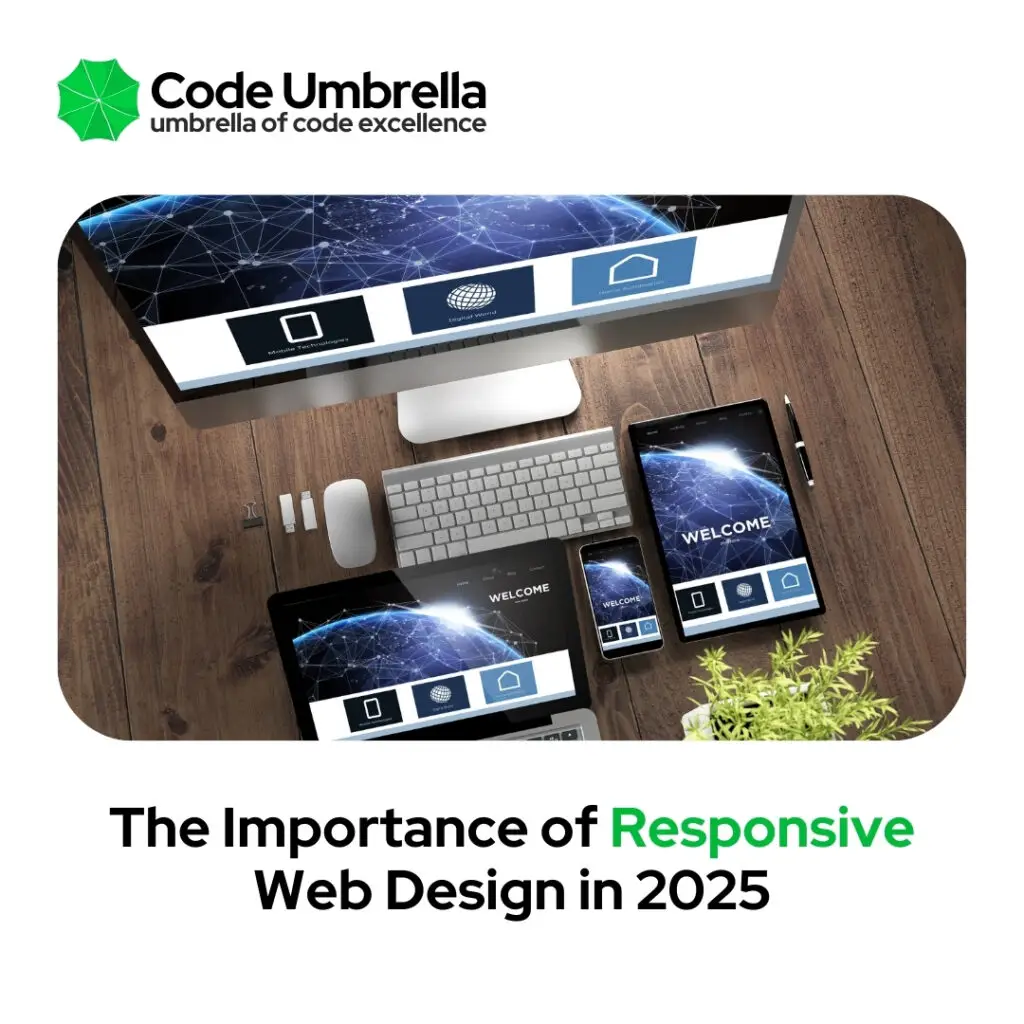

As mobile device usage continues to soar, responsive web design is no longer just a trend—it’s a necessity. In 2025, businesses that neglect responsive design risk losing visibility, engagement, and, ultimately, revenue. Why? Because the modern consumer expects seamless browsing, regardless of their device. Whether on a smartphone, tablet, or desktop, your website should adapt flawlessly to provide an optimal user experience.

What is Responsive Web Design?
Responsive web design (RWD) refers to the ability of a website to dynamically adjust its layout and content based on the screen size and orientation of the device it’s viewed on. Think of it like water—it takes the shape of whatever container it’s in. RWD achieves this by using flexible grids, images, and CSS media queries to ensure consistency across devices.
Why It Matters
Growing Mobile Traffic:
Did you know that mobile devices now account for more than 50% of global web traffic? This statistic highlights the importance of catering to mobile users.
Search Engine Optimization (SEO):
Google actively prioritizes mobile-friendly websites in its rankings. Neglecting responsiveness can push your website to the bottom of search results, making it harder for customers to find you.
Enhanced User Experience:
Imagine visiting a site where the text is tiny, and buttons are unclickable on your phone. Frustrating, right? Responsive design eliminates this by creating a consistent and enjoyable browsing experience.
How to Achieve Responsive Design
Flexible Grids:
Use percentage-based layouts instead of fixed-width designs. This ensures that content resizes proportionally based on the device’s screen size.
Media Queries:
These CSS rules allow you to apply specific styles for different screen sizes, ensuring that the design looks good across various devices.
Frequent Testing:
Use tools like Google’s Mobile-Friendly Test to evaluate your website. Regularly preview your site on multiple devices to ensure it remains functional and visually appealing.
Responsive web design isn’t just about aesthetics—it’s a critical component of modern business strategy. With the growing dominance of mobile devices and Google’s emphasis on mobile-first indexing, businesses can’t afford to ignore this trend. Investing in responsive design today will position your brand for success in 2025 and beyond.
Written by: Ismail A.
Also visit Code Umbrella LinkedIn page.